
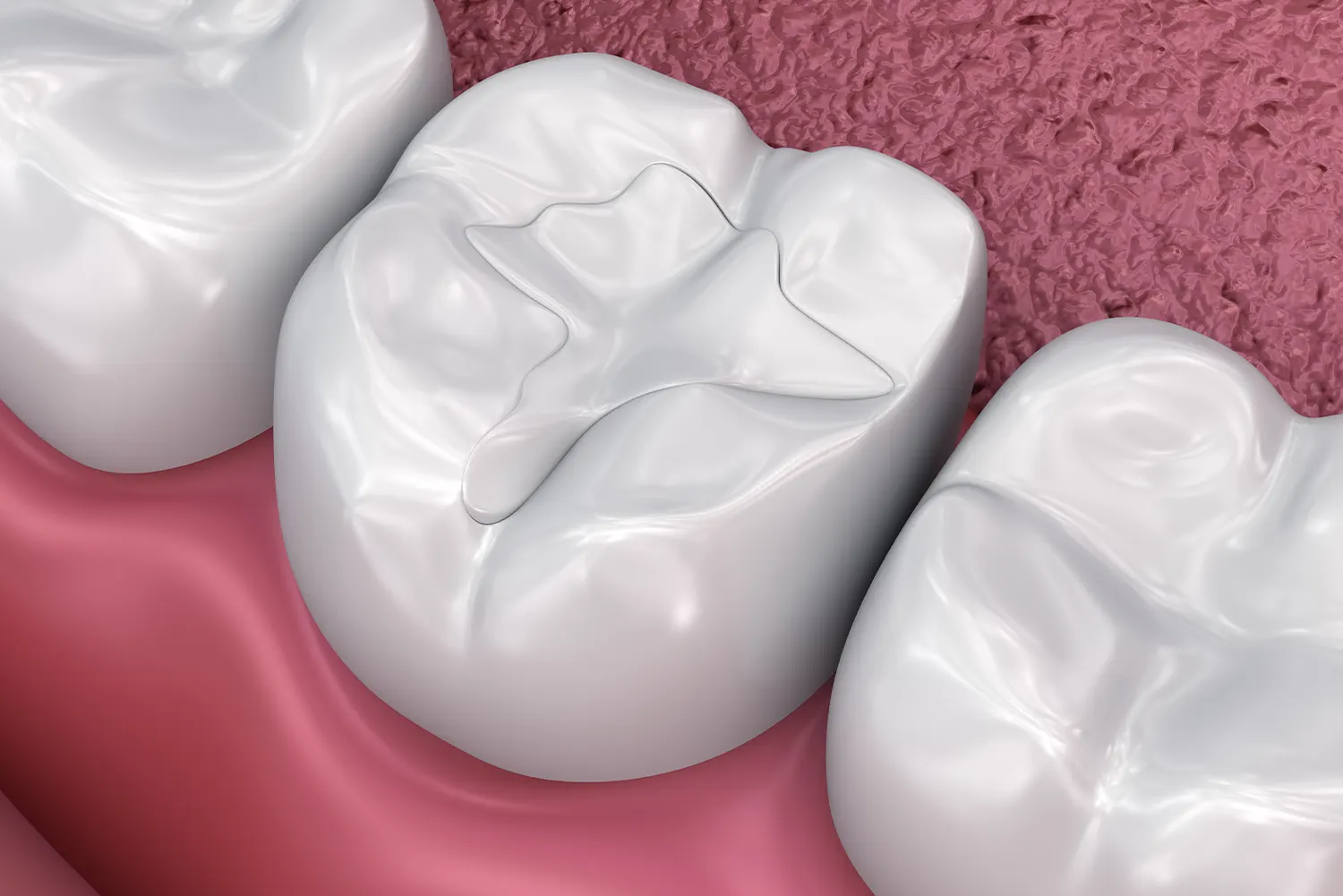
Ceramic Restorations: Why We Choose Tooth-Colored Materials Over Metal
For many years, metal restorations were the standard in dentistry. If you had a cavity, a cracked tooth, or an area that needed to be rebuilt, materials like amalgam, gold, and porcelain-fused-to-metal were often the best options available. They were strong, familiar, and widely used because dental technology simply had not advanced far enough to offer a more natural alternative.
Today, dentistry looks very different.
At Peninsula Center of Cosmetic Dentistry in Los Altos, CA, we use modern tooth-colored materials because they allow us to restore teeth in a way that is strong, precise, biocompatible, and beautifully natural-looking. Ceramic restorations are not just about aesthetics. They are about protecting healthy tooth structure, improving long-term function, and using materials that work more harmoniously with your natural teeth.
Why Metal Restorations Were Used for So Long
Metal and amalgam restorations have been used in dentistry since the late 1800s. At the time, they made sense. Gold could be melted and shaped to fit a prepared tooth. Amalgam could be softened, placed into the cavity, and allowed to harden and seal.
For decades, these materials were the best solution dentists had.
But as dental technology has evolved, we now understand the limitations of metal restorations more clearly. Metal does not behave like natural tooth structure. Over time, metal fillings and crowns can expand and contract at a different rate than the surrounding tooth. That repeated movement can place stress on the tooth, sometimes leading to cracks, weakened edges, or small openings where bacteria can collect.
Even when those openings are microscopic, they can create the perfect environment for decay to begin underneath or around an older restoration. In some cases, the problem is visible. In others, it may be difficult to detect until the restoration is removed or the tooth begins to show symptoms.
The Challenge With Older Metal Fillings and Crowns
When a patient comes in with a mouth full of older metal fillings, metal crowns, or porcelain-fused-to-metal bridges, one of the biggest questions is what may be happening underneath.
Metal blocks visibility on dental X-rays. Unless decay is large or extending deeply, it can be hard to see through or around a metal restoration. Sometimes we can detect a problem by feeling along the margins, especially if there is an opening where the restoration has started to pull away from the tooth. But smaller areas of leakage or decay may not always be obvious right away.
Another concern is age. Many older restorations were placed 20, 30, or even 50 years ago. The cement or bonding materials used at the time were not as advanced as what we use today. That does not automatically mean every old filling or crown needs to be replaced, but it does mean they should be carefully evaluated.
The goal is not to remove metal restorations simply because they are old. The goal is to understand whether they are still protecting the tooth or whether they are beginning to break down.
How Modern Tooth-Colored Materials Work Differently
One of the biggest advances in modern dentistry has been the improvement of enamel and dentin bonding. In simple terms, we can now chemically bond ceramic or composite restorations directly to the tooth.
This matters because ceramic restorations do not just sit on or in the tooth. They can be bonded to the enamel, which is the hard outer layer of the tooth, as well as to the dentin, the softer inner layer underneath. This allows us to rebuild lost tooth structure with a material that integrates closely with the natural tooth.
Ceramic is also biocompatible, meaning it is well-tolerated by the body. It can be shaped, shaded, and polished to blend beautifully with the surrounding teeth, making it especially valuable in cosmetic and restorative dentistry.
For patients, this means a restoration that looks natural, feels comfortable, and supports the tooth in a more modern, conservative way.
Ceramic Can Help Preserve More Natural Tooth Structure
Another major advantage of ceramic is that it can often be more conservative than metal.
Metal restorations require a certain thickness to be strong. Because of that, more tooth structure may need to be removed to create the proper shape and space. Ceramic works differently. Because it can bond directly to enamel and dentin, it can often be thinner while still providing excellent strength.
That means we can often remove less healthy tooth structure while still creating a durable, long-lasting restoration.
This is one of the reasons we value ceramic so much. Modern dentistry is not only about fixing what is damaged. It is also about preserving as much of the healthy natural tooth as possible.
The Aesthetic Difference Is Clear
Of course, one of the most noticeable benefits of ceramic restorations is the way they look.
Metal fillings and crowns can darken the appearance of a tooth. In some cases, they can create a gray shadow that shows through the enamel. Porcelain-fused-to-metal crowns may also reveal a dark line near the gumline over time, especially if the gums recede.
Ceramic restorations are tooth-colored and designed to blend with your smile. We can match the shape, shade, and translucency of your natural teeth, creating a result that feels seamless instead of obvious.
For patients who care about both health and appearance, ceramic offers the best of both worlds: strength and beauty.
Same-Day Ceramic Restorations With CEREC Technology
At Peninsula Center of Cosmetic Dentistry, we also use same-day ceramic restoration technology for many crowns, inlays, and onlays.
Traditionally, getting a crown required multiple appointments. You would come in, have the tooth prepared, take a traditional impression, wear a temporary crown, wait while a dental lab created the final restoration, then return for a second visit to have it placed. Temporaries could come loose, feel uncomfortable, or make the process feel longer than necessary.
With CEREC technology, we bring much of that lab process into our office.
After preparing the tooth, we take a 3D digital scan rather than using a traditional goopy impression. From there, we design the restoration chairside with precise attention to your bite, tooth shape, and surrounding anatomy. The restoration is then milled from a block of ceramic in our office and bonded to the tooth the same day.
In many cases, patients can leave with their final ceramic restoration in about 90 minutes to two hours. No temporary. No second appointment. No waiting for a lab.
It is a more efficient process, but it is also highly precise because the treating doctor is directly involved in designing and placing the final restoration.
Should You Replace Your Silver Fillings?
If you have silver fillings, that does not automatically mean they need to be replaced.
Some metal fillings are small, stable, and still well-sealed. If you have a low cavity risk and the restoration is functioning well, it may last for many years. There is no universal expiration date for a filling, crown, or dental restoration.
However, it is worth having older metal restorations checked regularly. If you notice cracks, gaps, dark edges, sensitivity, roughness, or food catching around a filling, those may be signs that the restoration is no longer sealing properly. In those cases, replacing the restoration before the tooth breaks can help prevent a much bigger issue later.
A small crack can sometimes be repaired predictably. A tooth that fractures severely may need more complex treatment, and in some cases, may not be restorable.
That is why proactive care matters.
A More Modern Way to Restore Teeth
Ceramic restorations represent a major shift in dentistry. Instead of relying on materials that simply fill or cover a tooth, we can now use tooth-colored restorations that bond directly to natural tooth structure, preserve more enamel, and create a result that looks and feels like part of your smile.
At Peninsula Center of Cosmetic Dentistry, our approach is thoughtful and individualized. We do not believe in replacing dental work unnecessarily. We evaluate each tooth, each restoration, and each patient’s needs carefully before making a recommendation.
If your older fillings or crowns are still healthy, we will tell you. If we see signs of leakage, cracks, or breakdown, we can walk you through your options and help you choose the solution that protects your smile for the long term.
Ceramic restorations allow us to combine strength, precision, and beauty in a way that simply was not possible with older materials. For many patients, that means a healthier tooth, a more natural-looking smile, and greater confidence in the care they receive.
If you are concerned about old metal fillings or want to learn more about tooth-colored ceramic restorations, our team in Los Altos is here to help you understand what is happening in your mouth and what options make the most sense for your smile.
