
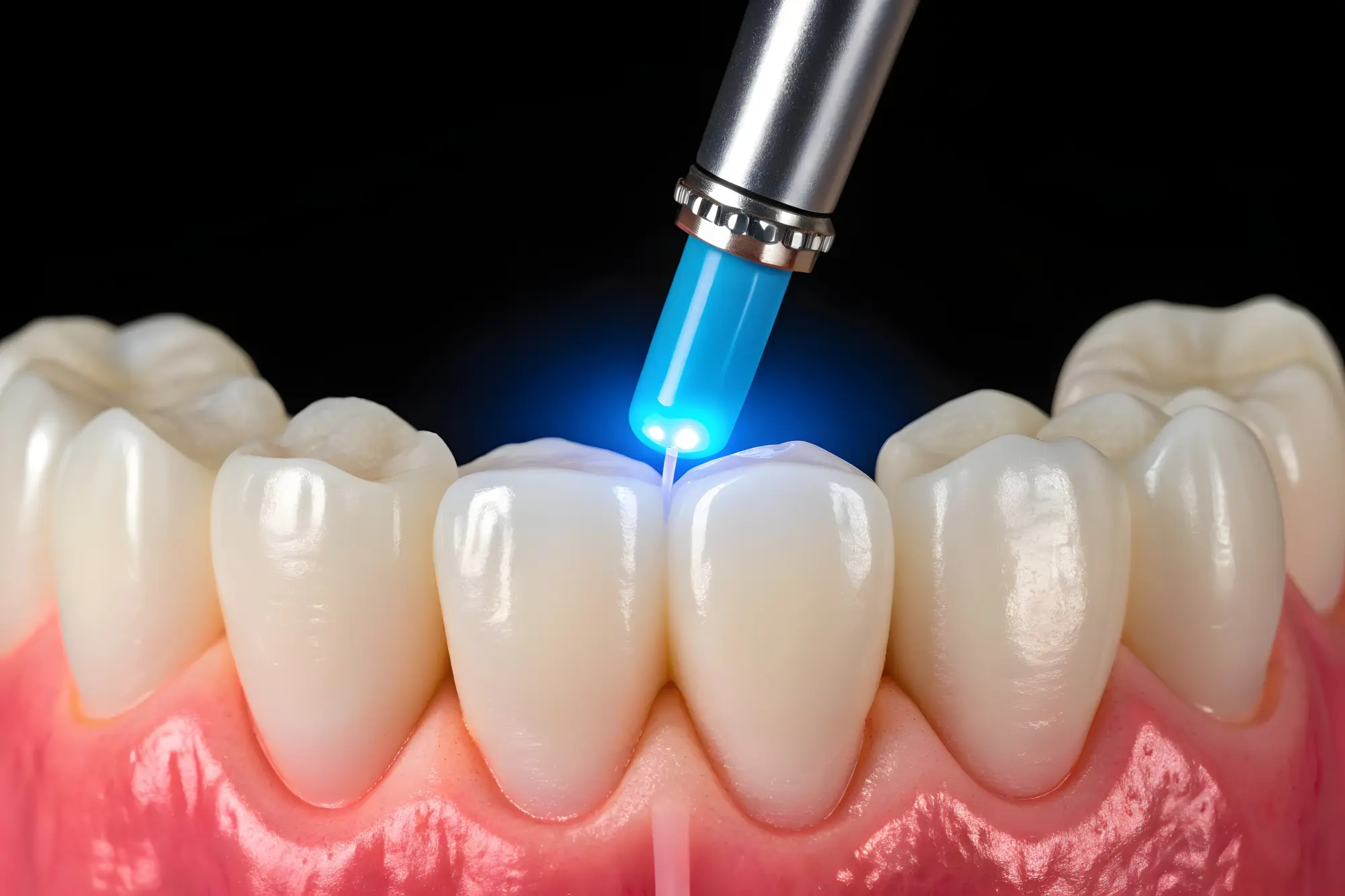
Is Laser Dentistry Safe for Deep Cavities or Old Filling Removal?
Laser dentistry may sound high-tech, but it has been used in dental care for decades, and today’s technology is more precise than ever. At Peninsula Center of Cosmetic Dentistry in Los Altos, CA, Dr. Joseph Field uses different types of dental lasers for specific purposes, from reshaping gum tissue to treating certain areas of decay. The key is knowing when a laser is the right tool and when a more traditional approach is actually safer and more effective.
Not All Dental Lasers Are the Same
The word “laser” is often used as though it refers to one single technology. In reality, there are several types of dental lasers, each designed for different tissues and procedures.
One of the most common lasers Dr. Field uses is a diode laser, which is primarily used for soft tissue. This type of laser is especially helpful for procedures like gum sculpting and contouring.
When designing a smile, the gums play an important role in framing the teeth. A diode laser allows the gumline to be reshaped precisely, often with very fast healing.
Hard tissue lasers are different. These lasers are designed to work on harder structures such as tooth enamel, dentin, and even bone.
That makes them useful for certain cavity treatments, restorative procedures, and procedures around dental implants.
Are Lasers Safe for Deep Cavities?
In carefully selected cases, hard tissue lasers can be very helpful when treating deep decay.
When a cavity extends close to the nerve of the tooth, the goal is always to remove the decay while preserving as much healthy structure as possible. The deeper the cavity, the greater the concern that the nerve may become irritated or damaged enough to require a root canal.
This is where a laser can sometimes provide an advantage.
According to Dr. Field, hard tissue lasers can help remove decay in a very controlled way. In certain situations, they may also help treat and condition the underlying dentin, creating a cleaner and more supportive environment before the tooth is restored.
That can be especially valuable when trying to protect the nerve and avoid more invasive treatment.
Avoiding a Root Canal When Possible
A root canal is sometimes necessary, but if the nerve can be preserved safely, that is often preferable.
For very deep cavities, Dr. Field may combine laser treatment with modern protective materials, including hydroxyapatite-based products that can be bonded over the deeper area of the tooth.
These materials help create additional insulation between the restoration and the nerve.
The goal is not simply to remove the cavity. It is to preserve the tooth, support the remaining structure, and give the nerve the best possible chance to stay healthy.
Over the course of his career, Dr. Field has found that combining careful decay removal with modern restorative materials can be highly effective in helping some patients avoid root canal treatment.
Where Hard Tissue Lasers Work Especially Well
One of the areas where hard tissue lasers can be particularly useful is pediatric dentistry.
Children often have relatively small cavities. Because of the way some hard tissue lasers interact with the tooth, certain fillings can sometimes be completed with little or no local anesthetic.
For a child who is nervous about injections or dental treatment, that can make a major difference in the experience.
Lasers can also be useful around dental implants, especially when tissue or bone needs to be carefully modified. Because laser-treated tissue can respond and heal very well, this can be an important advantage in certain implant-related procedures.
The important point is that lasers are not automatically “better” for every procedure. They are simply another advanced tool, and the best results come from using them where they make the most clinical sense.
Are Lasers a Good Choice for Removing Old Silver Fillings?
This is one area where Dr. Field does not prefer laser treatment.
Older silver-colored fillings, commonly called amalgam fillings, contain metal. Because lasers interact differently with metal than they do with natural tooth structure, using a laser directly on these fillings can create unwanted reactivity and heat.
For that reason, Dr. Field prefers a controlled traditional technique when removing old amalgam restorations.
The focus is on carefully removing the filling while using appropriate suction and protective measures for both the patient and dental team.
In this situation, a traditional handpiece can actually be the safer and more predictable option.
That is an important distinction because advanced dentistry is not about using the newest technology simply because it exists. It is about choosing the right tool for the right procedure.
Why Recovery Is One of the Biggest Benefits of Laser Dentistry
One of the most exciting advantages of dental lasers is how the surrounding tissue responds.
Whether a soft tissue or hard tissue laser is being used, Dr. Field often sees excellent healing after treatment.
Lasers can minimize unnecessary trauma to surrounding tissue, which can lead to a smoother recovery depending on the procedure.
This is especially valuable for gum procedures and treatments around implants, where maintaining healthy tissue is critical.
For patients, that can mean less irritation and a more comfortable healing process.
How Lasers Are Changing Modern Dentistry
Lasers are continuing to expand far beyond cavity treatment and gum contouring.
Today, laser technology is being used in areas such as whitening, restorative dentistry, imaging, and even the treatment of dental materials before crowns or onlays are placed.
Certain technologies can alter the surface or chemical properties of restorative materials to improve bonding or strength. Lasers are also being integrated into advanced imaging systems and 3D printing technologies.
The technology is constantly evolving.
That does not mean every dental procedure should involve a laser, but it does mean dentists have more precise tools than ever before to customize care.
So, Is Laser Dentistry Safe?
When used appropriately by an experienced dentist, laser dentistry is both safe and effective.
For deep cavities, lasers may help remove decay conservatively and support strategies designed to protect the nerve.
For gum contouring, implant-related procedures, and other soft tissue treatments, lasers can provide excellent precision and healing.
For old metal fillings, however, a laser may not be the best choice. In that situation, a traditional removal technique can be safer and more controlled.
Ultimately, the question should not be, “Can a laser be used?”
It should be, “Is a laser the best tool for this particular tooth?”
That distinction is what allows technology to improve care rather than simply complicate it.
Explore Advanced Laser Dentistry in Los Altos, CA
If you have a deep cavity, an older filling, or a tooth that needs restorative treatment, the right approach depends on the condition of the tooth and the materials involved. At Peninsula Center of Cosmetic Dentistry in Los Altos, CA, Dr. Joseph Field combines advanced laser technology with traditional restorative techniques to choose the safest and most effective option for each patient. Schedule a consultation to learn which treatment approach makes the most sense for your smile.
