
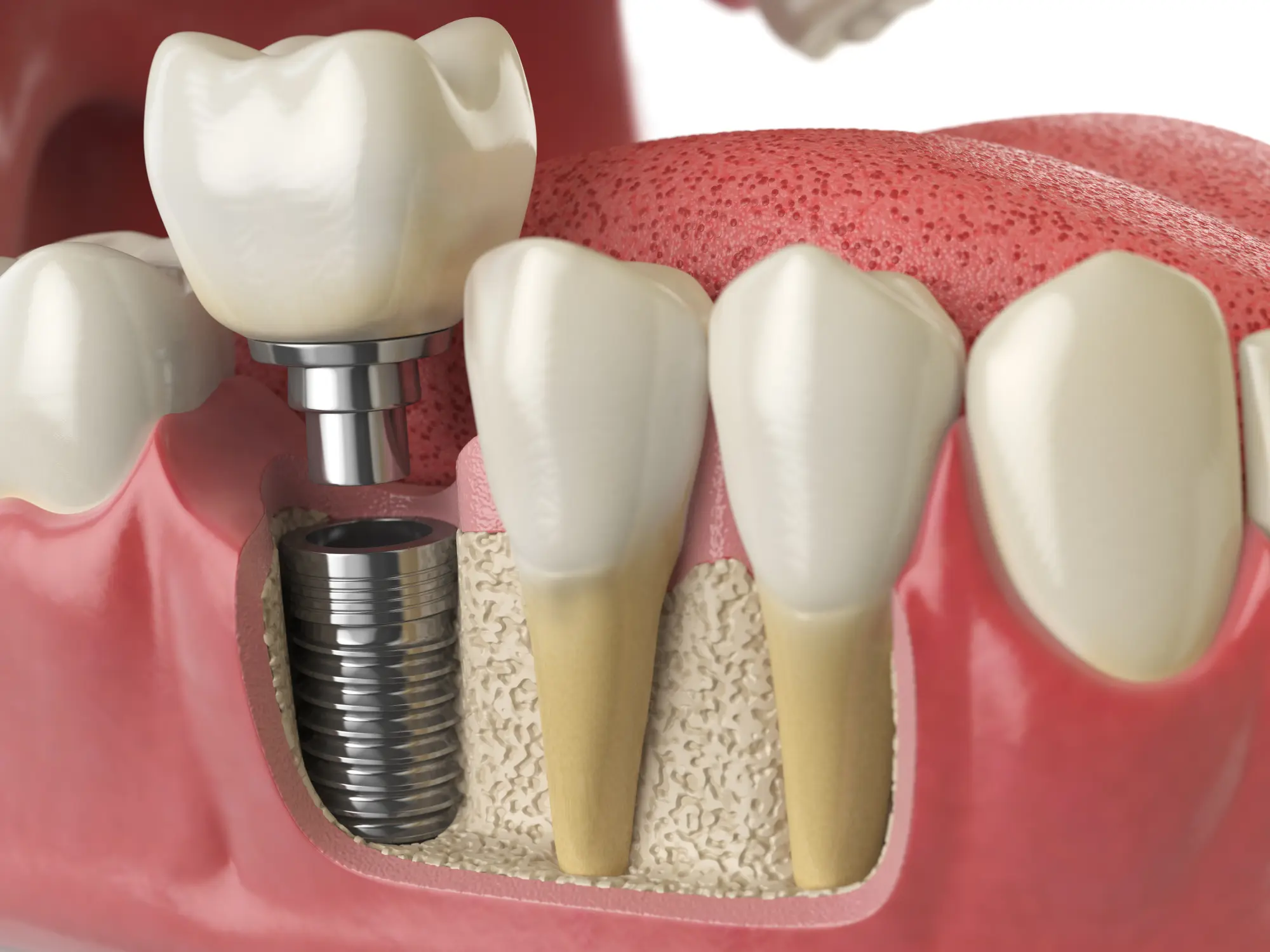
Single Implant: The Best Fix for One Missing Tooth
Losing a tooth can feel like a small problem at first, especially if it’s toward the back of your mouth or not immediately visible when you smile. But at Peninsula Center of Cosmetic Dentistry, we often remind patients that a single missing tooth can quickly become a much bigger issue if it’s left untreated.
Modern dental implants have changed the way we restore missing teeth. Instead of involving the surrounding healthy teeth, a single dental implant allows us to replace just the tooth that’s missing — nothing more, nothing less. For many patients, it’s the most natural, conservative, and long-lasting solution available.
Why replacing one missing tooth matters
It’s easy to think, “It’s only one tooth. I can live without it.”
But your teeth work together as a system. Once a tooth is missing, that system begins to change almost immediately.
The bone underneath the missing tooth starts to shrink because it no longer receives stimulation from chewing forces. Nearby teeth may begin drifting into the empty space. The tooth above or below the gap can also start moving out of position, a process called “super eruption.” Over time, these changes can affect your bite, your appearance, and even the long-term health of your other teeth.
What started as one missing tooth can eventually lead to additional wear, fractures, gum problems, or even more tooth loss.
That’s why replacing a missing tooth sooner rather than later is so important. Acting early helps preserve the bone, maintain your bite, and protect the healthy teeth around it.
The problem with traditional bridges
Before dental implants became widely available, dental bridges were often the standard way to replace a missing tooth. Bridges still have their place in dentistry and can be appropriate in certain situations. However, they do come with an important drawback.
To place a traditional bridge, the teeth on either side of the missing tooth usually need to be reshaped and covered with crowns. In other words, two healthy teeth are altered to replace one missing tooth.
Those three teeth then become permanently connected.
If something happens to one part of the bridge — decay, fracture, gum disease, or failure of one supporting tooth — it can affect the entire restoration. What was once a single tooth problem can suddenly involve multiple teeth.
This is why many dentists now consider a single dental implant to be the more conservative option whenever possible.
How a single dental implant works
A dental implant replaces the missing tooth from the root up.
First, a small titanium implant is placed into the jawbone where the missing tooth once was. Over time, the bone naturally fuses to the implant in a process called osseointegration. Once healing is complete, a custom dental crown is attached to the implant, creating a replacement tooth that looks and functions like a natural one.
The result is a restoration that stands independently without relying on the surrounding teeth for support.
When done properly, a dental implant should feel so natural that most people forget it isn’t their original tooth.
Dental implants are incredibly successful
Patients often come into consultations with concerns or stories they’ve heard about implants gone wrong. While complications can happen in any medical or dental procedure, dental implants have one of the highest success rates in healthcare when planned and placed correctly.
The key is proper diagnosis, careful planning, high-quality materials, and choosing the right treatment approach for each individual patient.
For healthy candidates, dental implants are extremely predictable and durable. Once healed, they allow patients to chew, smile, and speak comfortably again without worrying about slipping appliances or altering neighboring teeth.
In many cases, the implant becomes virtually indistinguishable from a natural tooth.
Why the process takes time
One thing patients should know is that dental implants are not usually an overnight solution.
Because the jawbone needs time to heal and fuse with the implant, the process can take several months from start to finish. While that waiting period may sound intimidating at first, it’s actually one of the reasons implants are so strong and long-lasting.
Bone heals slowly, and allowing that healing process to happen properly creates a stable foundation for the final tooth replacement.
Fortunately, you do not typically have to walk around with an obvious gap during healing. Depending on your situation, there are several temporary options available.
Some temporary teeth are removable and can be taken in and out. Others are bonded into place and stay fixed during the healing process. The best option depends on the location of the missing tooth, your bite, and the overall condition of your mouth.
Most patients find that the temporary phase is much easier than they expected, especially knowing it’s only temporary.
“Why didn’t I do this sooner?”
One of the most common things patients say after completing the implant process is, “I wish I had done this sooner.”
Many people spend months or even years worrying about the procedure, imagining it will be painful, complicated, or overwhelming. But once they experience the process themselves, they often realize it was far more manageable than expected.
Beyond restoring the appearance of the smile, patients frequently notice improvements in comfort, confidence, chewing ability, and overall quality of life.
Replacing a missing tooth can help people feel like themselves again.
Waiting can make treatment more difficult
Delaying treatment after losing a tooth can sometimes create additional complications.
As the bone shrinks over time, there may eventually not be enough healthy bone left to support an implant without additional procedures such as bone grafting. Teeth shifting into the open space can also make placement more complicated and may require orthodontic treatment before an implant can be placed properly.
In some cases, prolonged tooth loss can even affect facial support and aesthetics as the jawbone changes shape.
The sooner a missing tooth is evaluated, the more options are typically available for straightforward treatment and ideal long-term results.
Let’s transform your smile
If you are missing a tooth — or have been told you may need an extraction — now is the time to explore your options. At Peninsula Center of Cosmetic Dentistry, we can help you determine whether a single dental implant is the right solution for your smile and walk you through every step of the process with clarity and care. Schedule a consultation today to protect your oral health, restore your confidence, and prevent one missing tooth from turning into a bigger problem down the road.
