
The Connection Between Your Bite and Jaw Pain: TMJ/TMD Explained
Jaw pain can be frustrating because it does not always feel like a “dental” problem at first. You may notice tension in your face, soreness near your ears, headaches, clicking when you open and close, or tightness that spreads into your neck and shoulders. Many patients are surprised to learn that these symptoms can be connected to the way their teeth come together.
At Peninsula Center of Cosmetic Dentistry in Los Altos, CA, we look at jaw pain through a whole-system lens. Your teeth, bite, jaw joints, muscles, nerves, neck, and even the way your lower face is supported are all connected. When one part of that system is under stress, the effects can show up in places that feel completely unrelated.
Understanding that connection is the first step toward finding lasting relief.
TMJ vs. TMD: What Is the Difference?
The terms TMJ and TMD are often used interchangeably, but they do not mean exactly the same thing.
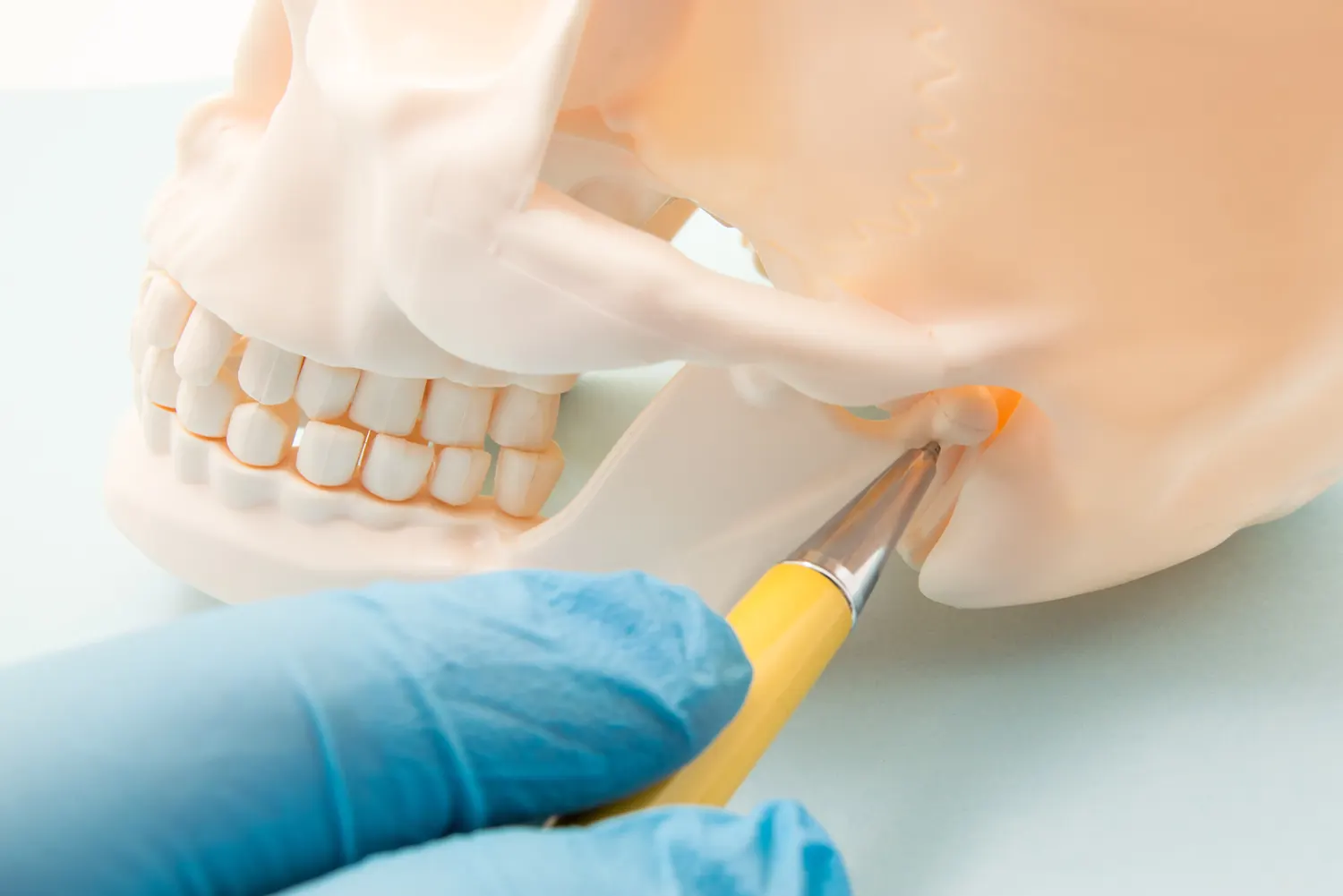
TMJ stands for temporomandibular joint. This is the jaw joint itself, located on each side of your face where your lower jaw connects to your skull. Everyone has a TMJ, even if the joint is perfectly healthy.
TMD stands for temporomandibular joint disorder. This refers to a problem or dysfunction involving the jaw joint, the surrounding muscles, or the way the jaw is working. So when people say they “have TMJ,” what they usually mean is that they are experiencing TMD symptoms.
These symptoms can include jaw pain, clicking or popping, muscle tension, worn teeth, headaches, migraines, neck pain, facial soreness, or difficulty chewing comfortably. In some cases, the issue is mild and occasional. In others, it becomes a constant cycle of tension, clenching, tooth wear, and pain.
How Your Bite Affects Your Jaw
Your bite is the way your upper and lower teeth come together. Ideally, that contact should be balanced, stable, and supportive. When your teeth meet evenly, the jaw joint and muscles can function with less strain.
But if one tooth hits too soon, if a tooth is out of alignment, or if certain teeth are too high, too worn, or not supporting the bite properly, the entire system can become unstable.
A helpful way to think about it is like a car with one tire that is a little low. Even if the other tires are fine, that one uneven point can throw off the alignment of the whole car. Your bite can work the same way. One uneven point of contact can affect how the jaw joint sits, how the muscles fire, and how much tension builds across the head, neck, and upper back.
This is why a small issue in the mouth can sometimes create symptoms that feel much bigger than the tooth itself.
Why Clenching Makes the Problem Worse
Many people hold tension in their jaw without realizing it. This is especially common during stressful seasons, focused work, long commutes, or while sleeping. Instead of the teeth resting apart, the jaw clenches down, placing extra pressure on the teeth, muscles, and joints.
One surprising fact: your teeth should not really be touching during the day unless you are swallowing. Even when you chew, your teeth should be contacting food, not grinding directly against each other. If your teeth are touching often, pressing together, or grinding tooth-on-tooth, that is a sign the system may be under stress.
Over time, the forces from clenching can be significant. The enamel can wear down. Teeth can crack, chip, loosen, shift, or become more sensitive. The bone around the teeth may also be affected, which can contribute to gum recession. Since the gums follow the bone, recession is often a sign that the supporting structures are under pressure.
This is one reason TMD is not just about jaw discomfort. It can also affect the long-term health and stability of your teeth.
Worn Front Teeth Can Be a Clue
One commonly overlooked sign of TMD is worn front teeth.
Some patients brace their jaw by pushing the lower jaw forward and resting on the edges of the front teeth. It may feel like a relaxed position in the moment, but it can put strain on the jaw joints and muscles. Over time, the front teeth can begin to flatten, shorten, chip, or look visibly worn.
This type of wear can suggest that the bite is not being supported properly in the back or that the jaw is trying to find a more comfortable position. It may also be associated with clicking, muscle tension, or jaw stress, though not every patient experiences the same combination of symptoms.
The important takeaway is that worn teeth are not always just a cosmetic issue. They can be a functional clue that the bite and jaw are not working together as well as they should.
Why Jaw Pain Can Cause Headaches, Neck Pain, and More
The jaw is surrounded by a complex network of muscles and nerves. Those muscles do not work in isolation. They connect into the head, neck, spine, and upper back. When the jaw joint is strained or the bite is unstable, the muscles around it may work harder to compensate.
That tension can spread.
Some patients feel it as facial soreness. Others notice migraines, headaches, tight neck muscles, ear-area pain, or tension across the shoulders. The source may be the bite, the jaw joint, the muscles, or a combination of all three.
This is also why treating jaw pain can be more complicated than simply relaxing the muscles. Massage, heat, physical therapy, chiropractic care, and other muscle-focused therapies can be helpful for symptom relief. They may calm inflammation, reduce tightness, and make you feel better temporarily.
But if the bite is still creating instability, the tension often comes back.
Nightguards and Oral Appliances
One common way to help manage TMD symptoms is with an occlusal guard or oral appliance. This is a removable device worn while sleeping. The goal is to help place the jaw in a more even, stable, and supported position while reducing harmful tooth-to-tooth contact.
For many patients, a properly designed appliance can make a meaningful difference. It gives the jaw a healthier position to rest in for part of the day, especially during sleep when clenching or grinding may be harder to control.
However, an appliance does not permanently change how the teeth come together during the rest of the day. It can help protect the teeth and reduce strain at night, but it may not fully correct the underlying bite issue.
That is why a complete evaluation is so important.
When Bite Correction May Be Needed
If jaw pain is being driven by an unstable bite, lasting treatment may involve improving the way the teeth fit together. Depending on the patient, that might mean carefully reshaping small areas of contact, moving teeth into a more balanced position, or rebuilding worn teeth so the bite has better support.
The goal is not just to make the teeth look better. It is to create a more stable, even bite that allows the muscles and jaw joint to relax.
In cosmetic dentistry, this is especially important. Beautiful dental work has to function well, too. If the bite is not balanced, restorations can chip, wear, crack, or fail earlier than they should. A smile that looks natural and lasts over time needs a foundation that supports it.
Why Early Treatment Matters
Jaw pain and tooth wear tend to progress gradually. At first, the signs may be subtle: a little clicking, occasional tightness, mild tooth wear, or headaches that come and go. But over time, the teeth can lose structure, the bite can collapse, and the lower face may begin to look shorter or flatter as the support between the nose and chin changes.
Addressing these issues earlier can help preserve tooth structure, protect the joints, and maintain the natural proportions of the face.
You do not have to wait until the pain is severe or the teeth are visibly damaged to ask questions.
A More Complete Way to Understand Jaw Pain
At Peninsula Center of Cosmetic Dentistry, we do not look at jaw pain as an isolated symptom. We look at the way your teeth, muscles, joints, and bite are working together.
Sometimes the solution is simple monitoring or a custom appliance. Sometimes it requires a more comprehensive plan to stabilize the bite and protect the teeth. Either way, the first step is understanding what is actually causing the strain.
If you are experiencing jaw pain, headaches, clicking, worn teeth, or facial tension, your bite may be part of the story. Our team in Los Altos can help you get clear answers and explore treatment options designed to support your comfort, function, and long-term smile health.
